
The Most Beautiful Place in Norway
Norway is full of dramatic coastlines and jaw-dropping fjords, but…
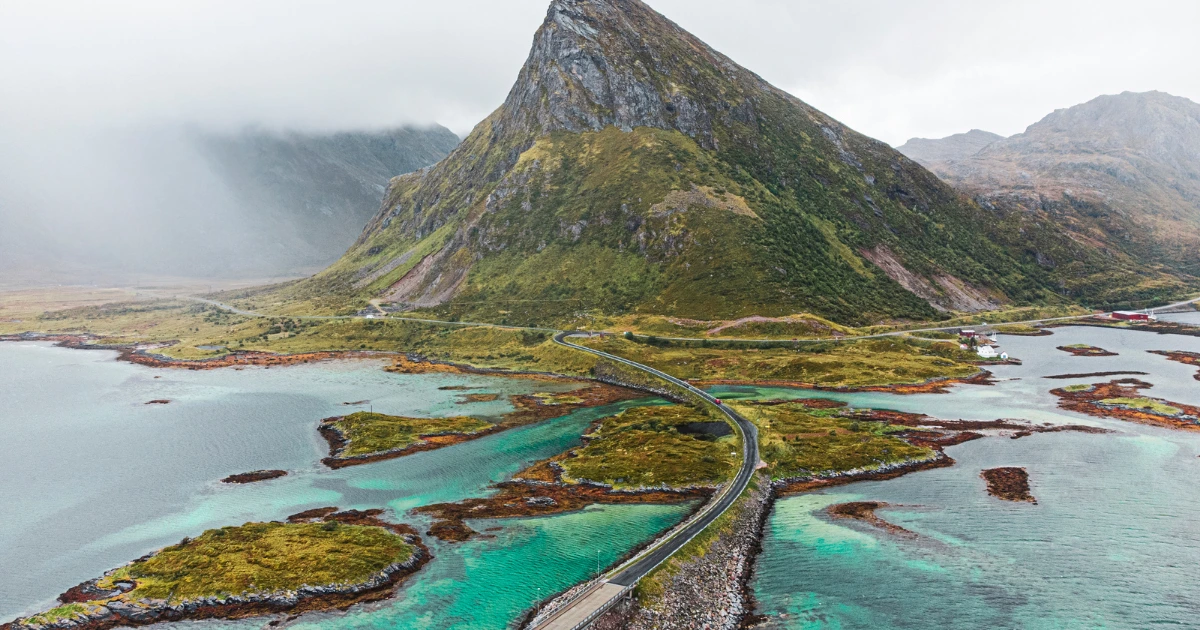
Norway is full of dramatic coastlines and jaw-dropping fjords, but if you ask well-traveled locals and photographers alike, one region keeps coming out on top: the Lofoten Islands. Jagged granite peaks rise straight out of the sea, fishing villages cling to tiny harbors, and beaches that look Caribbean-blue sit just steps from Arctic waters. This guide covers everything you need to plan a trip to what many consider the most beautiful place in Norway.
Table of Contents
Why Lofoten Is the Most Beautiful Place in Norway
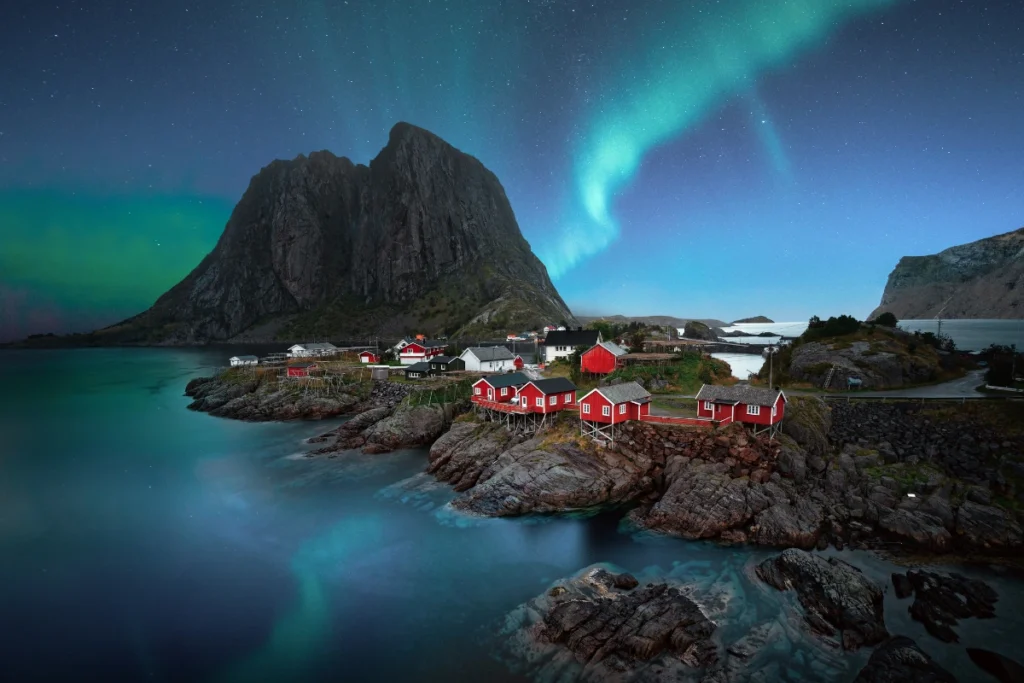
Lofoten earns its reputation because it packs an unusual mix of landscapes into a small archipelago. Sharp mountain peaks, some rising over 1,000 meters, plunge directly into the sea with almost no foothills in between a dramatic contrast you don’t find in most of Norway. White sand beaches like Kvalvika and Skagsanden sit beneath these peaks, and the water can look turquoise on a sunny day despite the Arctic latitude.
The islands also carry centuries of history. Red and white fishermen’s cabins, known as rorbuer, still line the harbors, many of them now converted into cozy places to stay. Add in the midnight sun in summer and a real shot at the northern lights in winter, and it’s easy to see why so many travelers and photographers call Lofoten the most beautiful place in Norway.
Find hotels in Lofoten for your trip
Best Places to See in Lofoten
Lofoten isn’t one single viewpoint it’s a string of villages and landscapes, each with its own character. These three are the ones most visitors build their trip around.
Reine: The Most Beautiful Village in Lofoten
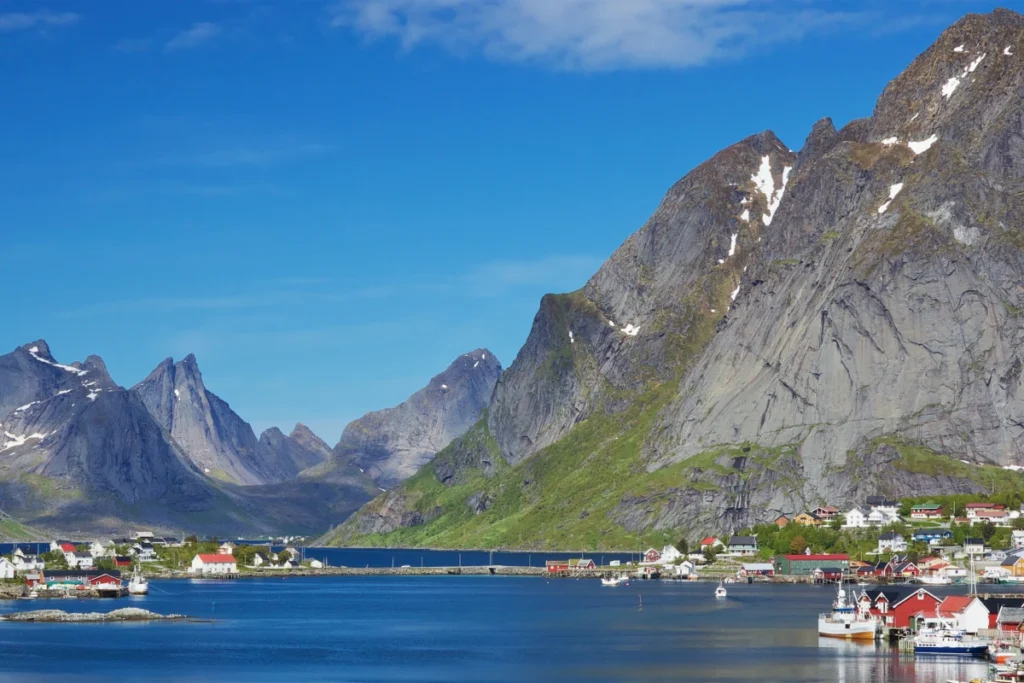
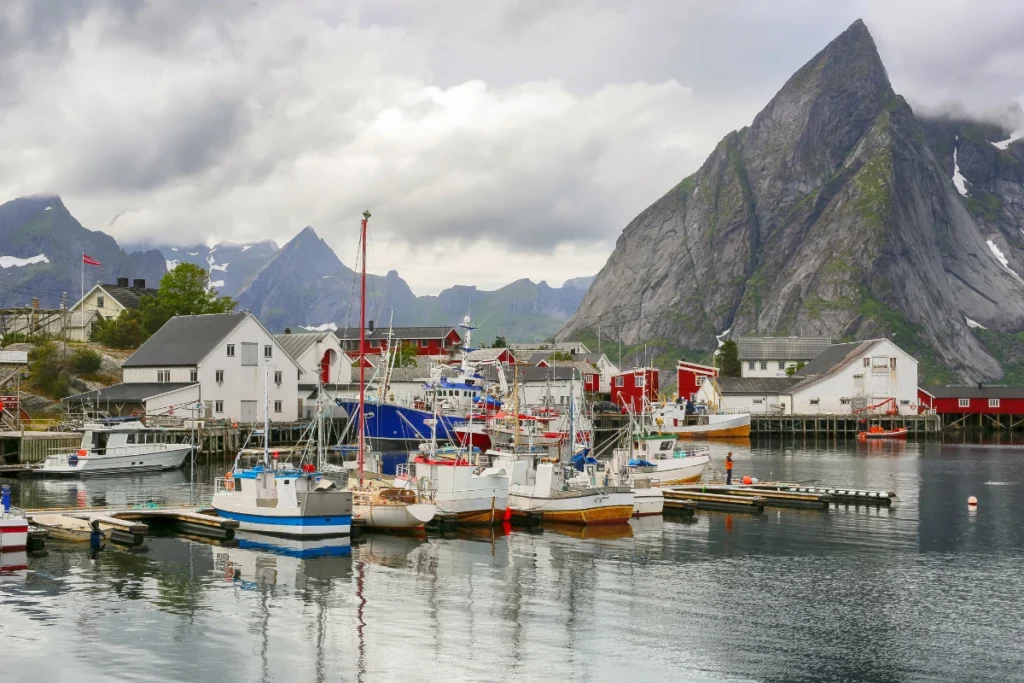
Reine is the postcard image of Lofoten, and for good reason. The village sits on a small peninsula surrounded by steep, saw-toothed peaks, with red rorbuer cabins reflected in the still water of the fjord. The viewpoint from Reinebringen, the mountain just above the village, is one of the most photographed spots in all of Norway the hike up is steep, but the reward is a sweeping view over the entire village and surrounding islands.
Henningsvær and Its Scenic Harbor
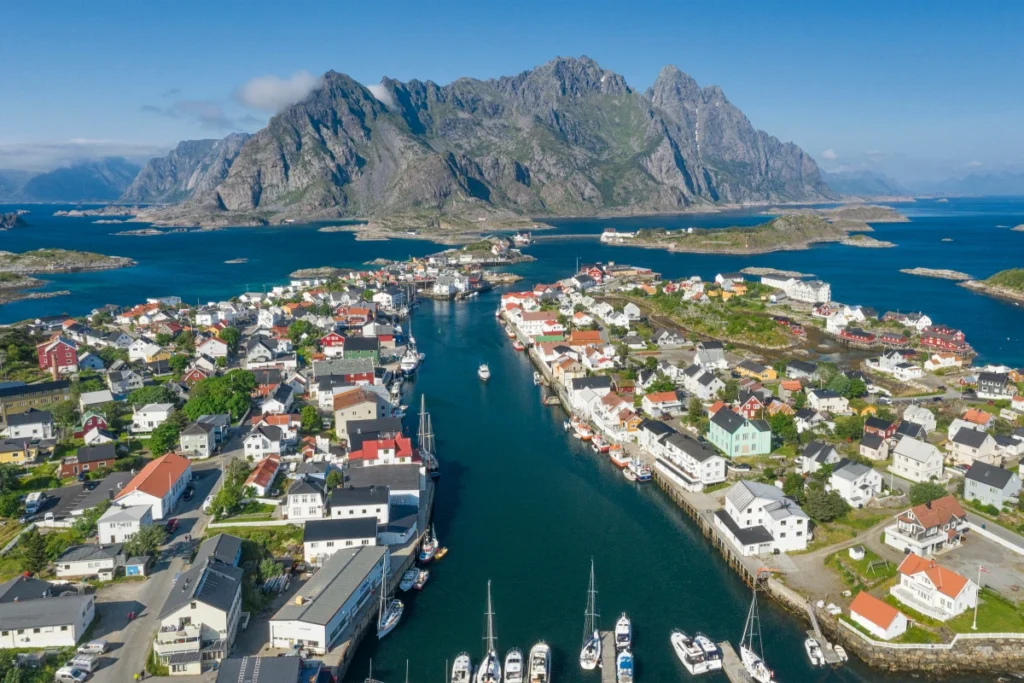
Often called the “Venice of Lofoten,” Henningsvær is a small fishing village spread across a cluster of tiny islets connected by bridges. It has a more lived-in, artsy feel than Reine, with galleries, cafés, and a well-known outdoor football pitch that looks like it was built at the edge of the world. The nearby Festvågtind viewpoint gives you a bird’s-eye look at the whole village laid out among the rocks.
Nusfjord: A Historic Fishing Village
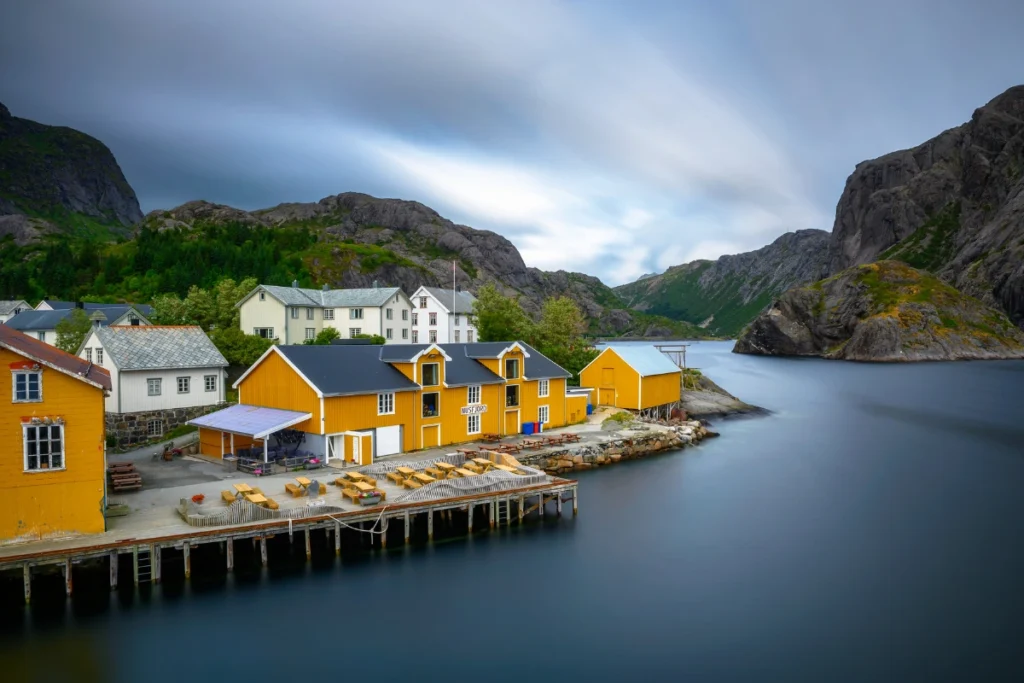
Nusfjord is one of the best-preserved fishing villages in Norway, with wooden buildings and boathouses dating back over a century. It’s smaller and quieter than Reine or Henningsvær, which makes it a good stop for travelers who want a slower, more historical experience rather than a bustling harbor.
Best Things to Do in Lofoten
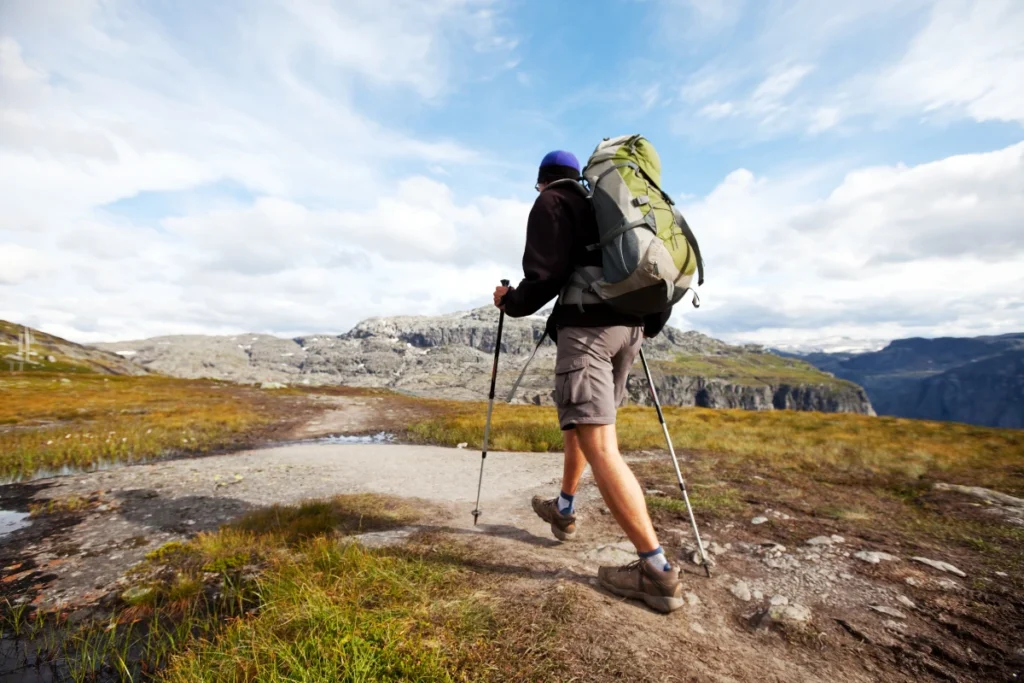
Lofoten rewards travelers who like to get outside. Hiking is the main draw, with trails ranging from short, family-friendly walks to demanding climbs like Reinebringen and Ryten, which overlooks Kvalvika Beach. Kayaking through the fjords gives you a completely different perspective on the mountains, and in summer, the water is calm enough for even beginners.
Explore Lofoten tours and activities
Beach time is also a real option here Haukland and Uttakleiv beaches have soft white sand and turquoise water, even if the air temperature reminds you you’re well north of the Arctic Circle. For a break from the outdoors, the Lofotr Viking Museum on Vestvågøy recreates a Viking longhouse and offers a look at the region’s deeper history. Fishing is practically a local institution too, and several villages offer boat trips where you can try your hand at catching cod.
You might also like this: best Things to Do in Norway
How to Get to Lofoten: Norway’s Most Beautiful Place
Most travelers fly into Bodø or Harstad/Narvik on the Norwegian mainland, then either take a short connecting flight to Svolvær or Leknes, or catch a ferry across to the islands. The ferry from Bodø to Moskenes is a popular option and lets you bring a car, which makes getting around Lofoten much easier once you arrive.
Another scenic route is to drive the E10 highway from Narvik, crossing bridges and tunnels that link the islands together, with mountain and coastal views the entire way. It takes longer than flying, but it’s considered one of the most beautiful road trips in Norway in its own right.
Best Time to Visit Lofoten, Norway
Summer, from June through August, is the most popular season thanks to the midnight sun, mild weather, and long days for hiking. Late June to early July is peak season, so expect more crowds and higher prices for accommodation.
Winter, particularly November through February, is the best window for spotting the northern lights, and Lofoten’s dramatic peaks make for a striking backdrop against the aurora. Shoulder seasons like September and early October offer a good middle ground fewer tourists, autumn colors, and still a decent chance of clear skies for the lights.
How Many Days Do You Need in Lofoten, Norway?
Four to five days is enough to hit the highlights Reine, Henningsvær, a beach or two, and one or two hikes. If you want to slow down, explore Nusfjord, try kayaking, and build in flexibility for weather delays (which are common), a week to ten days gives you a much more relaxed pace. Given how much driving and ferry time is involved in getting between villages, it’s worth padding your itinerary rather than packing it too tight.
Find hotels in Lofoten for your stay
How to Get Around Lofoten, Norway?
Renting a car is by far the easiest way to explore Lofoten, since public transportation is limited and many of the best viewpoints and beaches aren’t accessible by bus. The E10 highway connects most of the main villages, and having your own car means you can chase good weather and light for photos, which can change quickly.
For travelers without a car, local buses run between the larger towns like Svolvær, Leknes, and Å, though schedules are limited, especially outside summer. Cycling is another option for shorter distances if you don’t mind hilly terrain and unpredictable weather.
Final Thoughts on Lofoten, Norway
Lofoten lives up to the hype. Few places combine dramatic mountains, white sand beaches, and centuries-old fishing villages in such a small area, and that combination is exactly what makes it feel like the most beautiful place in Norway. Whether you come for a few days of hiking and photography or a longer trip exploring every village along the E10, Lofoten rewards travelers who take the time to explore beyond the first viewpoint.