
Best Things To Do in Rome, Italy (2026 Guide)
Discover the best things to do in Rome, Italy, from iconic landmarks like the Colosseum and Trevi Fountain to charming neighborhoods, delicious Italian food, and unforgettable local experiences. Plan your perfect Rome trip with these top attractions and practical travel tips.
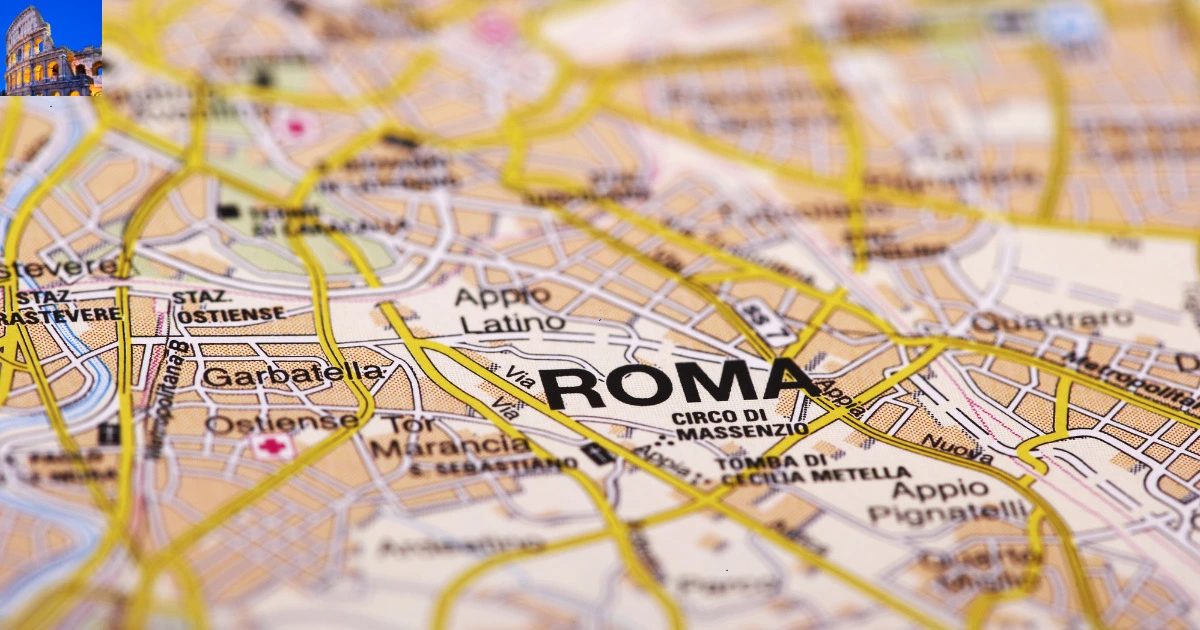
Rome has a way of making you feel small and lucky at the same time. You turn a corner and a 2,000-year-old temple sits beside a coffee bar, a fountain hums in a square where gladiators’ contemporaries once walked, and lunch arrives with a plate of pasta that someone’s grandmother would approve of. If you are searching for the best things to do in Rome, Italy, the real challenge is not finding options. It is choosing among thousands of years of them. This guide covers the icons, the quiet corners, the food, and the practical details, so you can plan a trip that feels full without feeling rushed.
Table of Contents
Top Things to Do in Rome at a Glance
Before the details, here is the short version. Rome rewards a mix of big sights and slow wandering, and the best itineraries combine both.
Must-See Things to Do in Rome for First-Timers
If this is your first visit, build your plan around five anchors: the Colosseum, the Roman Forum and Palatine Hill, Vatican City (the Vatican Museums, Sistine Chapel and St. Peter’s Basilica), the Pantheon, and the Trevi Fountain. Add an evening in Piazza Navona or Trastevere and you have covered the essentials. These sights are popular for good reason, but they are also the busiest, so book timed tickets ahead for the Colosseum and Vatican Museums and arrive early or late in the day.
Free Things to Do in Rome
Rome is one of the best cities in Europe for free sightseeing. You can walk into St. Peter’s Basilica without a ticket (expect a security queue), admire the Trevi Fountain and the Spanish Steps, wander Piazza Navona, and step into dozens of churches that hold paintings by Caravaggio, Bernini and Michelangelo. Climb the Janiculum Hill for one of the city’s best panoramas, stroll through Villa Borghese park, or walk a stretch of the Appian Way. Many state museums and archaeological sites also offer free entry on the first Sunday of the month, though rules and crowds change, so check the official sites before you plan around it.
Iconic Things to Do in Rome
These are the sights that define the city. Give each one real time rather than ticking it off from the edge of a crowd.
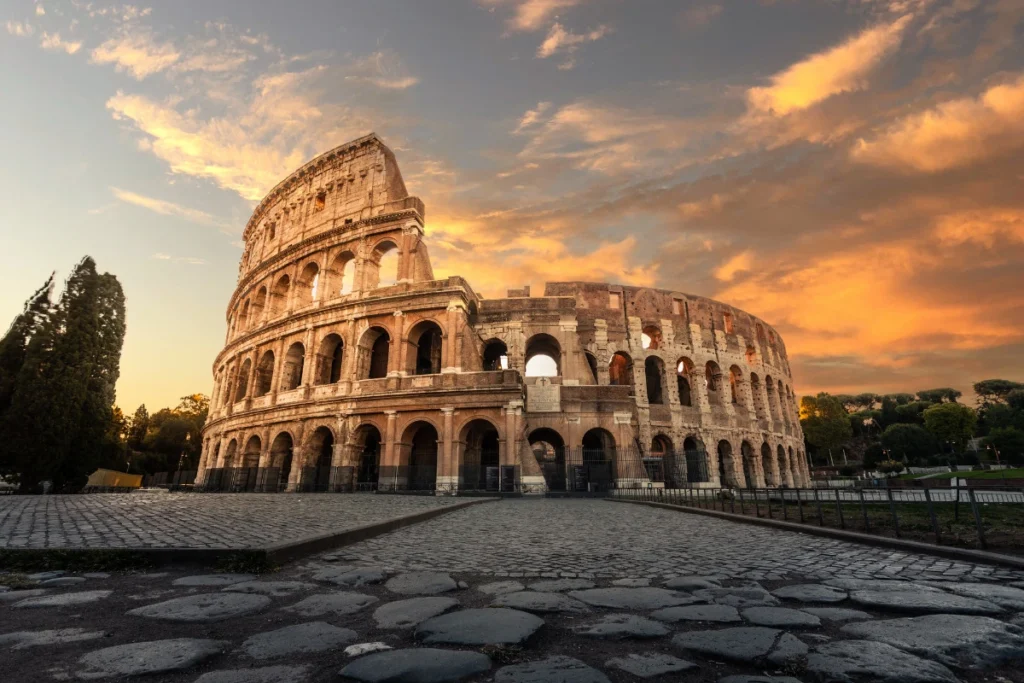
Colosseum: A Classic Thing to Do in Rome (Tickets and Timing)
The Colosseum is the largest amphitheater the Romans ever built, and standing inside it still lands with force. Once home to gladiator contests and public spectacles, it now draws millions of visitors a year, which makes ticket strategy half the experience.
Buy tickets only through the official Colosseum archaeological park website or an authorized seller. Standard tickets typically bundle the Colosseum with the Roman Forum and Palatine Hill, and the bundle is valid for a limited window, so you can split the sites across a morning and an afternoon. Choose the first entry slot of the day or the last one before closing for thinner crowds and softer light. If you want the arena floor or the upper tiers, look for special-access or guided options, which sell out well in advance. Allow about 90 minutes inside.
Vatican City: Essential Things to Do in Rome for Art Lovers
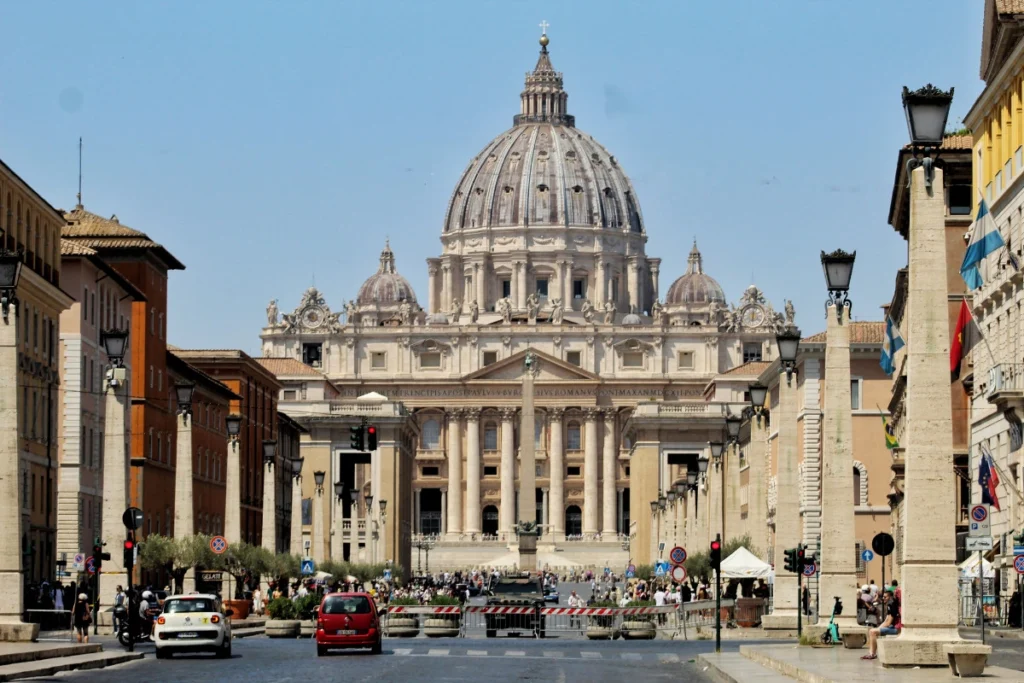
Vatican City is technically its own country, and its museums hold one of the world’s great art collections. The route winds through galleries of classical sculpture, Raphael’s Rooms, and finally the Sistine Chapel, where Michelangelo’s ceiling and Last Judgment reward the long walk.
Book timed-entry tickets online, since walk-up queues can stretch for hours. The museums are generally closed on Sundays, except on the last Sunday of the month when entry is free and the crowds are enormous. Dress modestly, as shoulders and knees should be covered for both the Sistine Chapel and St. Peter’s Basilica. After the museums, visit St. Peter’s, where Michelangelo’s Pietà and Bernini’s baldachin are the highlights. If you have the energy, climb the dome for a view across the rooftops of Rome.
Roman Forum and Palatine Hill: Walk Through Ancient Rome
The Forum was the political, religious and commercial heart of the ancient city. Today it is a field of columns, arches and foundations, and it can feel like a pile of rubble until you imagine the Senate meeting, processions passing under the Arch of Titus, and merchants shouting across the Via Sacra. A guide or audio tour makes a major difference here.
Palatine Hill rises above the Forum and, according to legend, is where Romulus founded the city. Emperors later built their palaces on it. The hill is greener and quieter than the Forum, with sweeping views down over the ruins and across to the Circus Maximus. Plan two to three hours for both, and bring water and a hat in summer, because shade is scarce.
Pantheon, Trevi Fountain and Piazza Navona: Easy Things to Do in Rome on Foot
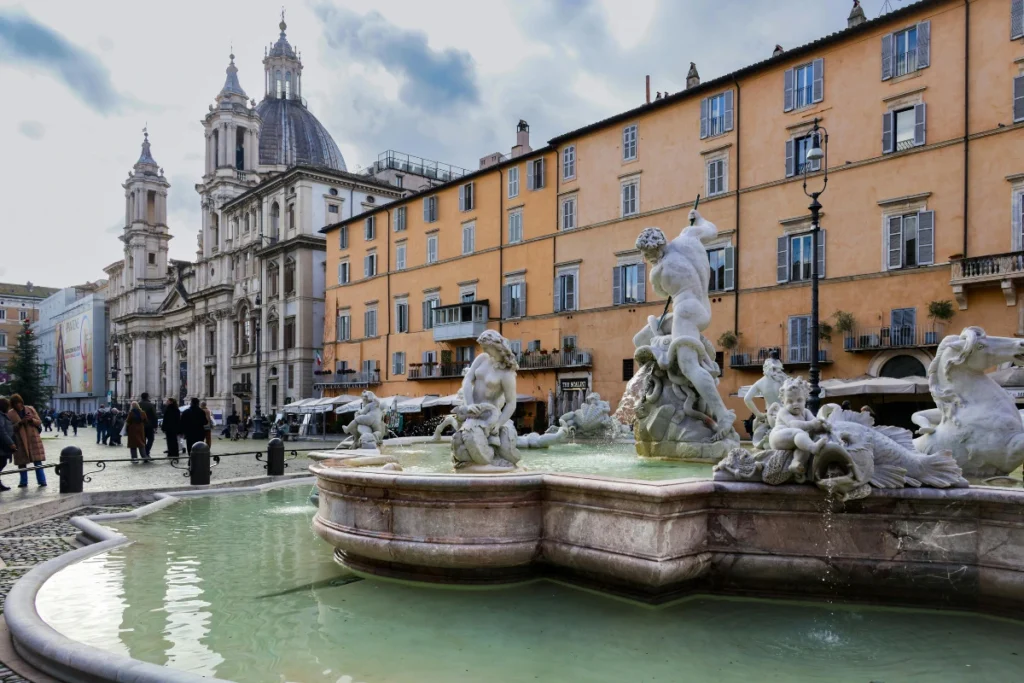
These three sights sit within a short walk of each other in the historic center, which makes them ideal for an unhurried afternoon. The Pantheon, nearly two millennia old, has the world’s largest unreinforced concrete dome, with a central oculus that pours a column of light into the room. Entry now requires a ticket, so check the current arrangements before you go.
The Trevi Fountain is a short stroll away. Go early in the morning or late at night to see it without a wall of phones, and check current local rules, as Rome has been experimenting with ways to manage the crowds around it. Finish at Piazza Navona, where Bernini’s Fountain of the Four Rivers anchors a lively square of street artists, cafes and gelato. Walk between them down side streets rather than main roads and you will find small churches, bookshops and wine bars along the way.
Hidden Gem Things to Do in Rome
Once you have seen the icons, Rome gets even better when you slow down and leave the main routes.
Aventine Keyhole and Orange Garden
On the Aventine Hill, a green door on Piazza dei Cavalieri di Malta hides one of Rome’s best small surprises. Look through its keyhole and you will see a perfectly framed view of the dome of St. Peter’s at the end of a clipped hedge corridor. There is often a short line, but it moves quickly and the moment is memorable.
A few minutes away, the Orange Garden (Giardino degli Aranci) is a calm terrace shaded by orange trees, with a lovely view over the Tiber and the rooftops. Come near sunset for the best light. Both spots are free, and together they make a peaceful break between heavier sightseeing.
Appian Way and Catacombs
The Appian Way (Via Appia Antica) was one of the first and most important roads of the Roman Republic, and parts of its original paving stones still survive. On Sundays, much of the road is closed to cars, so it is a lovely day for walking or renting a bike. Along the route you will pass tombs, ruined villas and pine-lined stretches that feel far from the city.
Beneath it lie the catacombs, vast underground burial networks used by early Christians. Several, including San Callisto and San Sebastiano, offer guided visits. Tours are usually limited to specific hours and each catacomb has its own closing day, so confirm schedules before you set out. Photography is typically restricted underground.
Food Things to Do in Rome
Eating well is not a side activity in Rome. It is one of the main reasons to visit.
Trastevere Food Tour
Trastevere, across the Tiber from the historic center, is a maze of cobbled lanes, ivy-covered buildings and lively evening streets. A guided food tour here is an efficient way to taste a lot in a few hours, usually mixing fried snacks like supplì, cured meats and cheeses, fresh pasta, and a sweet finish. A good guide will also explain which dishes are truly Roman and where locals eat.
If you prefer to go it alone, try the classic Roman pastas: cacio e pepe, carbonara, amatriciana and gricia. Look for small trattorias with short menus and avoid places with photo menus or hawkers outside.
Local Markets and Trattorias
For a more local feel, visit a neighborhood market. Campo de’ Fiori is lively in the mornings, though increasingly touristy, while the market in Testaccio is a better bet for locals’ favorites like fresh produce, sandwiches and street food. Testaccio is also the historic home of Roman offal cooking and has some of the city’s best traditional trattorias.
A few habits will help you eat like a Roman. Lunch is typically between 12:30 and 2:30 pm and dinner rarely starts before 8 pm. Cappuccino is a morning drink. Standing at the bar for a coffee costs less than sitting at a table. And when you want something sweet, look for a gelateria with natural-colored flavors rather than piles of neon-bright ice cream.
Things to Do in Rome in 1, 2, or 3 Days
Rome cannot be fully seen in any number of days, but it can be sampled well. Here is how to shape your time.
Things to Do in Rome in One Day
With a single day, start early at the Colosseum and Roman Forum (about three hours), then walk to the Pantheon for lunch nearby. In the afternoon, visit Piazza Navona and the Trevi Fountain, and finish with dinner in Trastevere. You will skip the Vatican, which really deserves its own half day, but you will see the heart of ancient and baroque Rome. Wear comfortable shoes, because you will walk many miles.
With two days, add the Vatican on day two: museums in the morning, St. Peter’s afterward, and an evening stroll through the Prati neighborhood or along the river.
Things to Do in Rome in Three Days
Three days gives you room to breathe. Spend day one on ancient Rome (Colosseum, Forum, Palatine Hill), day two on the Vatican and the surrounding streets, and day three on the historic center: Pantheon, Piazza Navona, Trevi Fountain, and the Spanish Steps. Slot the Aventine Keyhole and Orange Garden in as a gentle sunset stop, and use a free evening for a food tour in Trastevere. If you have a spare half day, take it on the Appian Way and catacombs.
Tips for Planning Your Things to Do in Rome
A little planning goes a long way in a city this popular.
Best Time for Things to Do in Rome
Spring (April to early June) and early autumn (September to October) are the sweet spots, with pleasant temperatures and long daylight hours. Summer is hot and crowded, and some local businesses close for part of August. Winter is cooler and quieter, with shorter queues and lower hotel prices, but also shorter days and some rain. Wherever you land, aim for early mornings at the major sights.
Getting Around Rome Between Attractions
The historic center is very walkable, and walking is often the most enjoyable way to travel, since you stumble onto things. For longer distances, Rome has a metro (lines A, B and C), buses and trams. The metro is handy for the Colosseum, the Vatican area and the Spanish Steps, but it does not reach every sight, and buses can be slow in traffic. Use licensed white taxis or ride-hail apps when needed, and be careful with pickpockets on crowded buses and at major attractions. From Fiumicino Airport, the Leonardo Express train runs to Termini station.
Where to Stay in Rome Near the Top Attractions
For first-timers, the historic center (Centro Storico) puts the Pantheon, Piazza Navona and Trevi Fountain at your door. Monti is a stylish, walkable neighborhood near the Colosseum and Forum with good restaurants and shops. Trastevere is atmospheric and lively at night, though it can be noisy. Prati, near the Vatican, is quieter and more residential, and a good base if the Vatican is a priority. Staying near Termini station is convenient for transport and often cheaper, though the area is less charming.
FAQs About Things to Do in Rome
What Are the Best Things to Do in Rome for First-Timers?
Start with the Colosseum, Roman Forum and Palatine Hill, the Vatican Museums and St. Peter’s Basilica, the Pantheon, and the Trevi Fountain. Add a walk through Piazza Navona and an evening in Trastevere. Book timed tickets ahead for the Colosseum and the Vatican.
How Many Days Do You Need to See the Top Things to Do in Rome?
Three days lets you cover the major sights at a comfortable pace. Two days is workable if you focus on the highlights, and one day is enough for a quick overview of ancient and central Rome. Four or five days lets you add hidden gems, day trips and slower meals.
What Are the Best Things to Do in Rome on a Budget?
Focus on the free sights: St. Peter’s Basilica, the Trevi Fountain, Piazza Navona, the Spanish Steps, churches, parks and viewpoints. Eat lunch at markets or standing at a bar, drink from the city’s free public drinking fountains (nasoni), and walk rather than paying for transport. Pick one or two paid attractions you care most about and skip the rest.
Final Thoughts on Things to Do in Rome
The best things to do in Rome are rarely just the famous ones. They are the pause for an espresso in a sunlit square, the unexpected church with a painting you did not plan to see, and the long dinner you decided not to rush. Book the key tickets, plan around the crowds, and leave room in your schedule to wander. Rome has been rewarding curious travelers for thousands of years, and it will reward you too. Start planning your trip, and let the city surprise you.